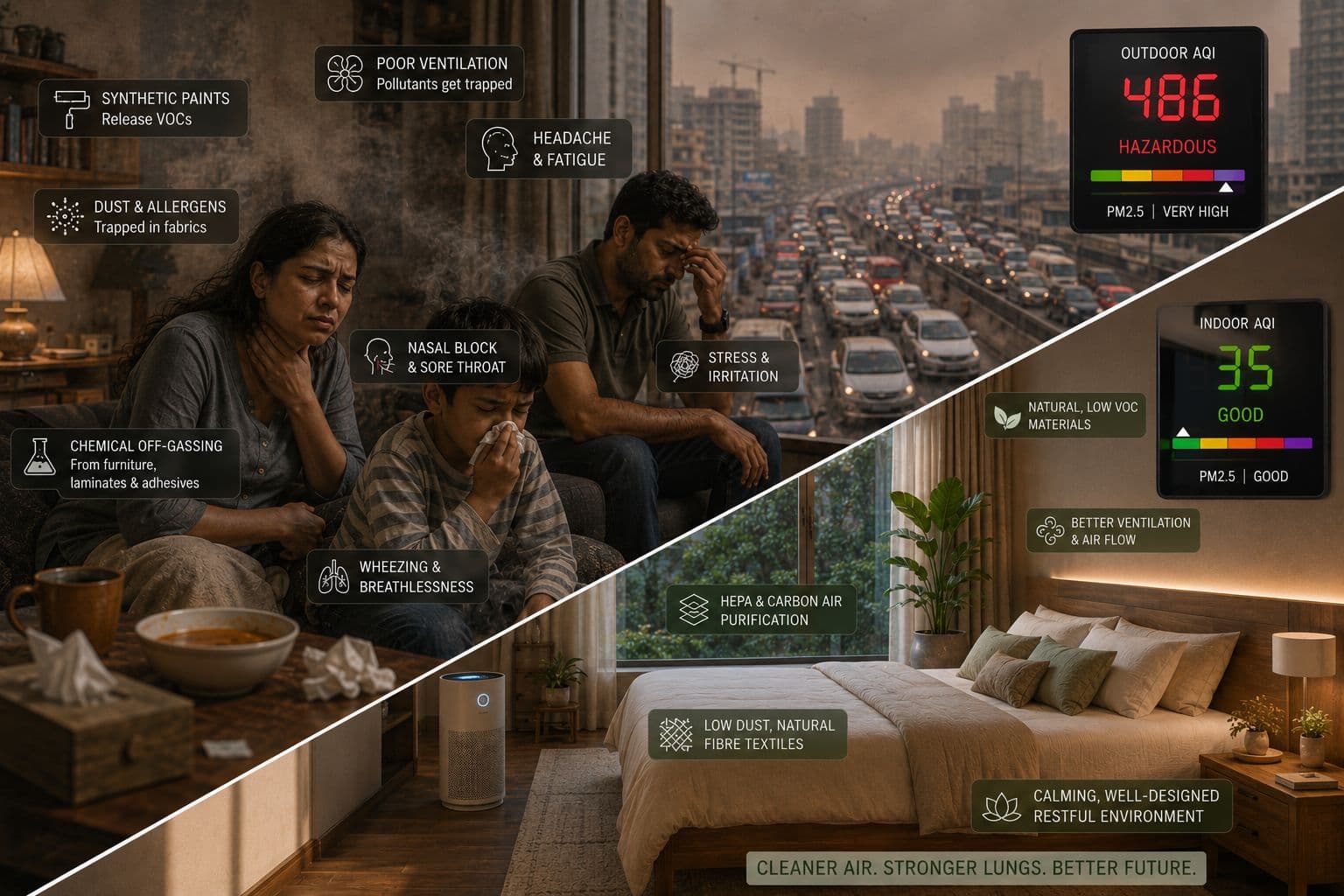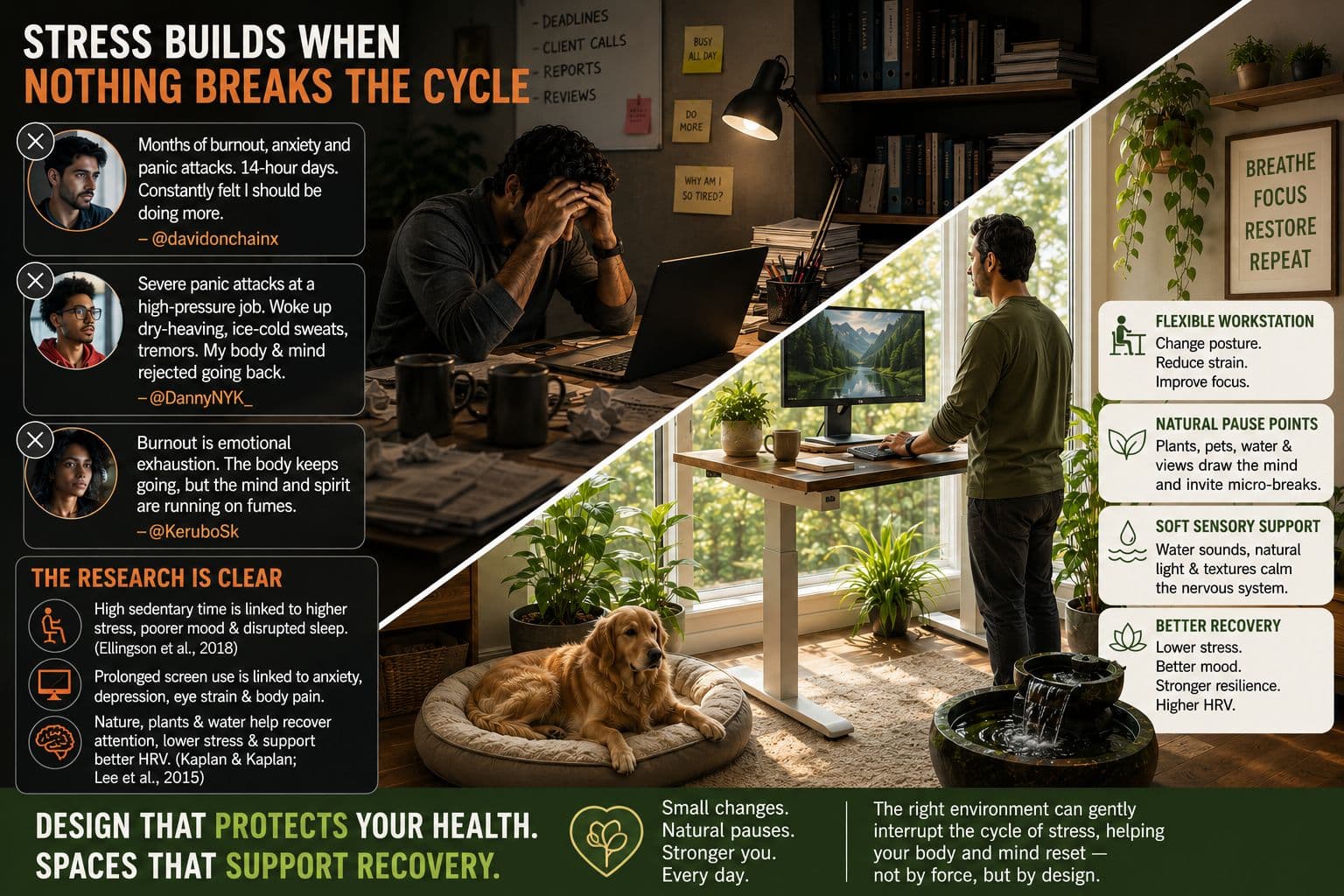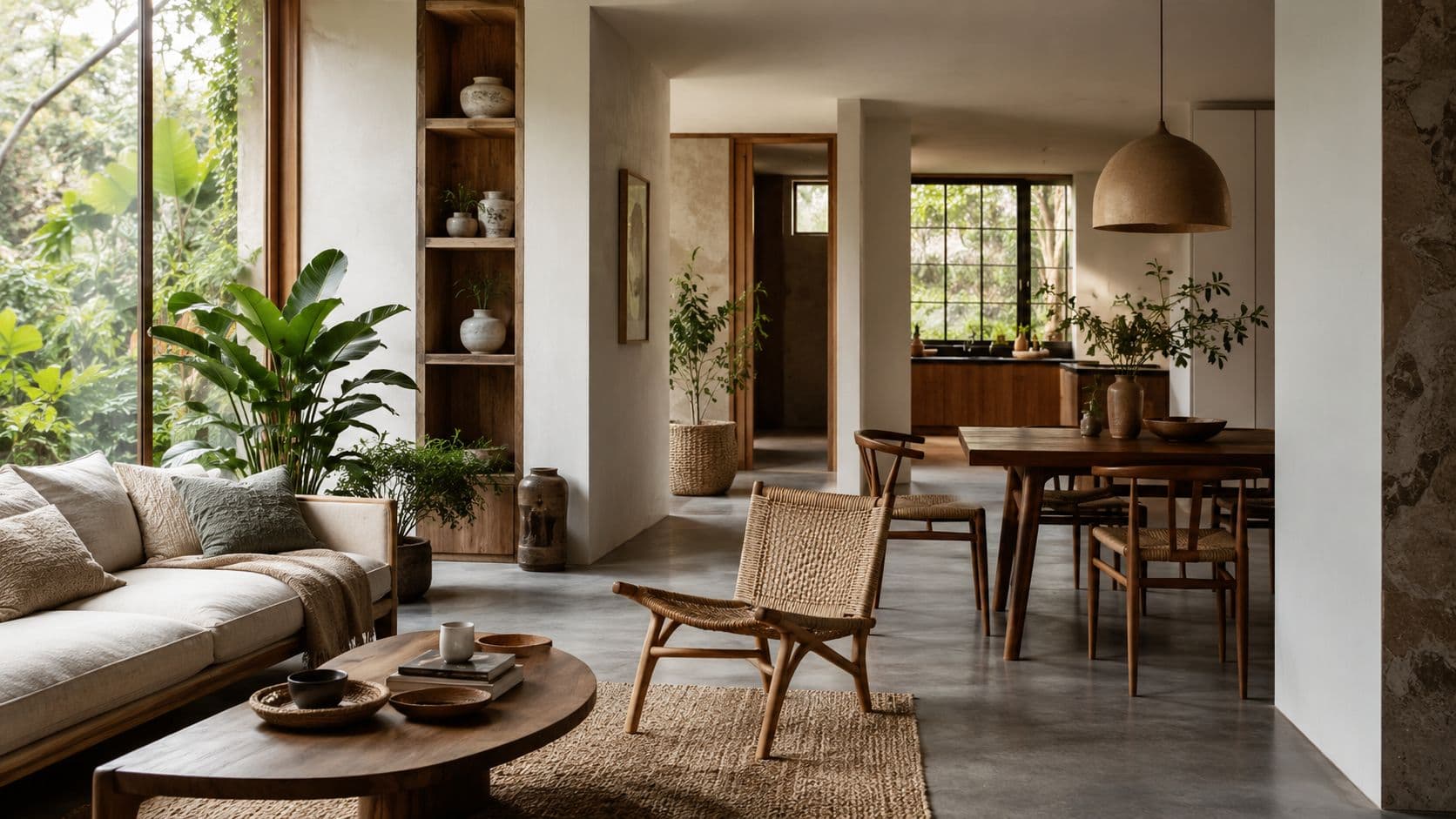
You know that moment in the middle of a long workday when everything starts to feel heavy. You have been at your desk since morning, pushing through meetings and deadlines, and by post-lunch a mild headache begins to creep in. You tell yourself you will leave a little early today, just to get some rest. The afternoon drags on. The three cups of coffee have not helped much, and you keep glancing at the clock, waiting for the moment you can finally pack up and head home.
The thought of home keeps you going.
You picture sinking into your bed, the quiet, the comfort. The moment you can take it no longer, you leave. The drive or the commute feels endless, but the promise of rest pulls you forward.
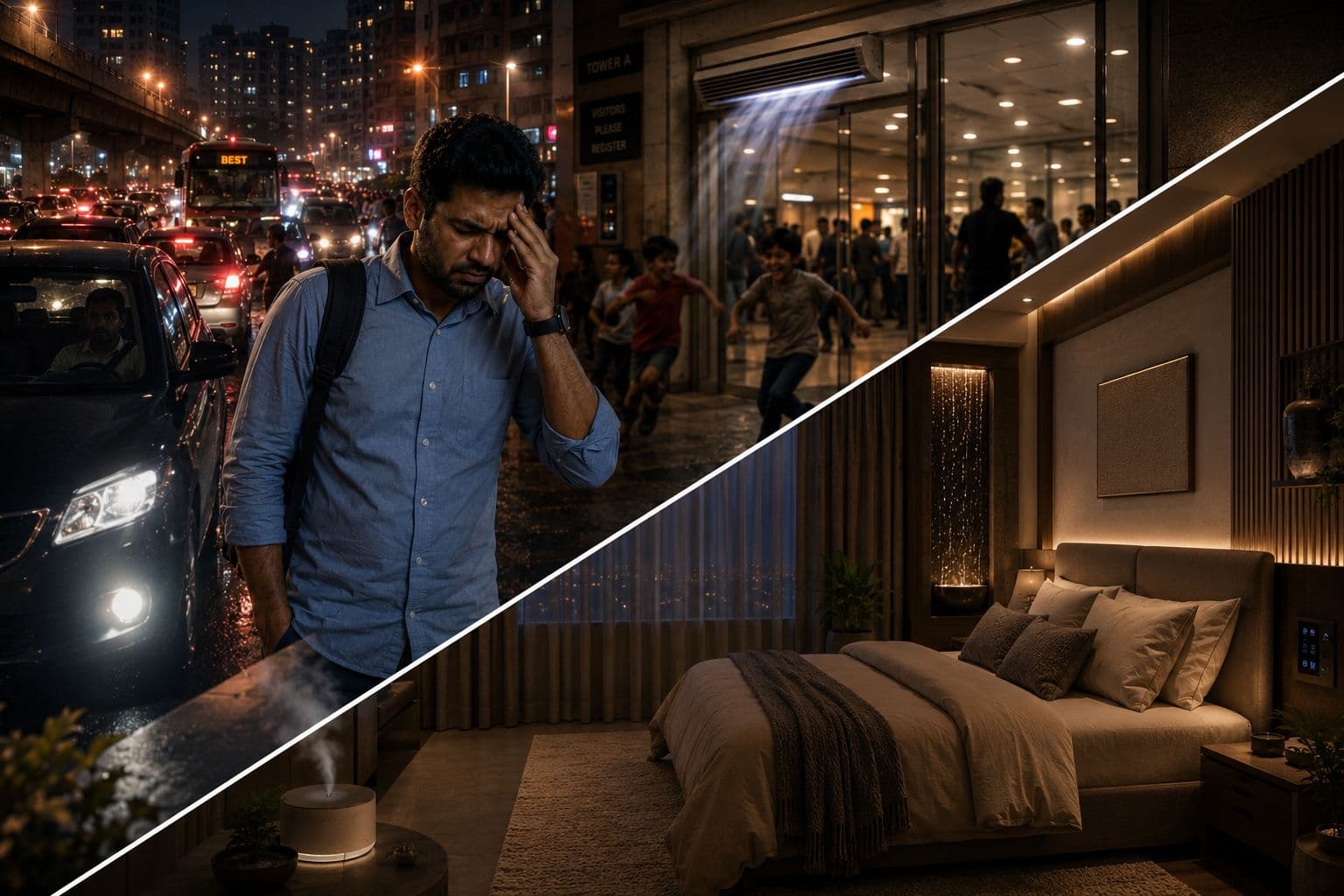
Then you reach home. And instead of the calm you were longing for, the challenges start adding up. The road outside is still busy with evening traffic. The lobby lights feel too bright after a day of screens. The air curtain at the entrance hits you with a blast of high-velocity air that makes your head throb even more. Noisy kids are running around in the common area. By the time you get to your bedroom, the headache is worse. You lie down hoping to sleep, but the sounds keep coming in — horns from the road, voices carrying through the walls. The work you left behind is still on your mind, with the deadline tomorrow. Rest does not come easily.
Many people share similar experiences. One person described leaving the office with a pounding headache only to face bright lights and noise at home. Another wrote about struggling to sleep because of traffic sounds and wishing the environment would just let their brain switch off. These stories show how the home we look forward to can sometimes add to the exhaustion instead of easing it. The real issue is often not just the work stress. A 2025 study by Zhang and colleagues on traffic noise and spring water sounds showed that certain sound frequencies, especially from traffic or constant low-level noise, keep the brain in an alert state and prevent it from fully relaxing into rest mode. This makes it harder to fall asleep or recover from the day's fatigue. The brain stays partly on guard, which adds to headaches and tiredness the next day.
What if you were told that many of these problems can be resolved with thoughtful changes in your interiors? If you face these challenges frequently, it often means you are slightly more sensitive to your environment than others. A 2021 review by Jimenez and colleagues on nature exposure and health suggests that improvements in the bedroom, such as better sound control and lighting, can help reduce sensitivity to outside stressors. People who create calmer home spaces often report feeling more resilient during the day, even when they are back in busy offices or noisy commutes.
Soft automated lighting that slowly dims in the evening will reduce the harsh brightness that worsens headaches. Automated curtains will block out street lights and reduce traffic noise entering the room. Adjustable air flow systems will prevent those sudden strong blasts from the air curtain or AC that add to the discomfort. Ergonomic mattresses and pillows will support better sleep posture so your body can actually rest instead of staying tense. For the noise, materials like heavy upholstery, acoustic panels, or even a small water wall or fountain will absorb unwanted sounds and add soothing background noise that helps the brain settle. These solutions can be matched to your budget and the layout of your home.
After talking with you in more detail and understanding the specific issues you face, Lucy will offer even more suitable recommendations tailored to your space. With these changes, many people find they sleep better at night and wake up feeling fresh and ready to take on the day at work.
If headaches and restless evenings have become too familiar, Lucy is here to help you explore practical ways to make your home a place of real comfort.
References
Zhang, N., et al. (2025). Study on the effects of traffic noise and spring water sound at different sound pressure levels on brain dynamic activity. Scientific Reports. Available at: https://www.nature.com/articles/s41598-025-96591-6 Jimenez, M.P., et al. (2021).
Associations between Nature Exposure and Health: A Review of the Evidence. International Journal of Environmental Research and Public Health. Available at: https://pmc.ncbi.nlm.nih.gov/articles/PMC8125471/ Alvarsson, J.J., Wiens, S., & Nilsson, M.E. (2010).
Stress recovery during exposure to nature sound and environmental noise. International Journal of Environmental Research and Public Health, 7(3), 1036–1046.
Relatable Experiences from X
A user described leaving work with a pounding headache and facing bright lights and noise at home: https://x.com/dahliasstars/status/2078266093710594132
Another shared struggling with office lights and wanting to go home to rest: https://x.com/akiralovebot/status/2067124310532116849
Experiences of headaches worsened by environment and difficulty sleeping: https://x.com/ChizoromOb69663/status/2069017770939813982