Remember how people used to walk in the older days?
They strolled. They ambled. They took their time. There was a natural rhythm to movement — unhurried, observant, almost meditative. People would pause to greet neighbours, admire a flowering tree, or simply breathe in the morning air. Personal time wasn’t something they had to schedule; it emerged naturally from the way they moved through their environment.
Today, everything feels rushed. We walk fast even when we don’t need to. We rarely look around. We are constantly in a hurry, heads down, minds elsewhere. We blame our “fast-paced lifestyle,” and while that is partly true, we are missing a bigger picture.
The environment itself is nudging us to move faster.
How the Ground Beneath Our Feet Shapes Our Pace
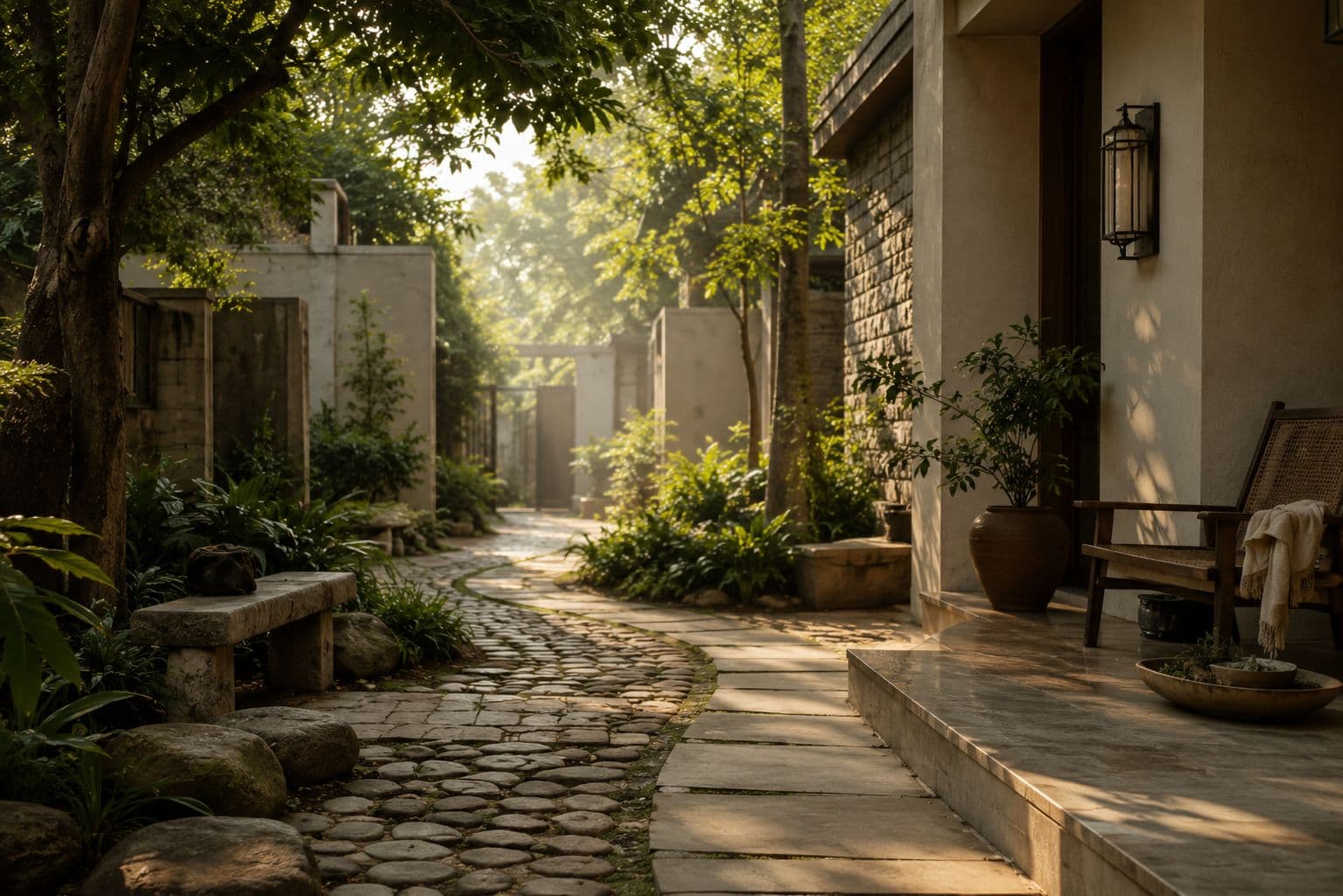
In earlier times, pathways were often made of cobblestones, gravel, or uneven natural surfaces. These textures gently forced the body to slow down. You had to pay attention to where you placed your feet. Your gait became more deliberate, your steps shorter and more mindful. This slower rhythm allowed the mind to sync with the body and the surroundings. You noticed the birds, the changing light, the breeze — small moments of presence that felt nourishing.
Modern pathways, on the other hand, are almost always smooth concrete or asphalt. They are designed for efficiency and speed. They encourage longer strides and faster walking. Research using wearable sensors and eye-tracking has shown that people walk faster and with less visual attention to their surroundings on smooth, even surfaces compared to uneven, natural ones (Matthis et al., 2018; Ladouce et al., recent gait analysis studies).
A landmark study by the Oregon Research Institute found that walking on cobblestone-like surfaces significantly improved balance, reduced blood pressure, and enhanced physical function in older adults compared to conventional flat walking. The uneven surface naturally encouraged slower, more attentive movement, which had measurable health benefits.
The Cost of Constant Speed
When we are always rushing, even at home or in landscaped areas with concrete paths, we lose something vital:
- Reduced mindfulness and attention restoration
- Higher stress levels and elevated cortisol
- Weaker connection to our surroundings and to ourselves
- Less opportunity for the nervous system to down-regulate
The environment no longer invites us to pause. It pushes us forward.
How Thoughtful Design Can Bring Back the Slow Rhythm
The good news is that we can intentionally design spaces that gently encourage slower, more mindful movement — even in modern homes and urban settings.
This could mean choosing textured or slightly uneven flooring in certain areas, creating winding circulation paths instead of straight corridors, incorporating natural elements that invite pauses (a beautiful window view, a small water feature, a comfortable seating nook along the way), or using materials that naturally slow the pace without causing inconvenience.
Lucy can help you explore these possibilities. As your design assistant, she understands how the surfaces and layout of your home influence your movement patterns and state of mind. She can suggest practical ways to create small pockets and pathways that invite you to slow down, look around, and reconnect — turning your home into a space that supports calm presence rather than constant rushing.
In a world that keeps speeding up, your home can become the gentle counterbalance — a place where you are invited to breathe, notice, and simply be.
If you’ve been feeling the constant rush and missing those slower, more present moments, Lucy is here to help you design spaces that bring some of that rhythm back.