When Stress Starts Feeling Familiar
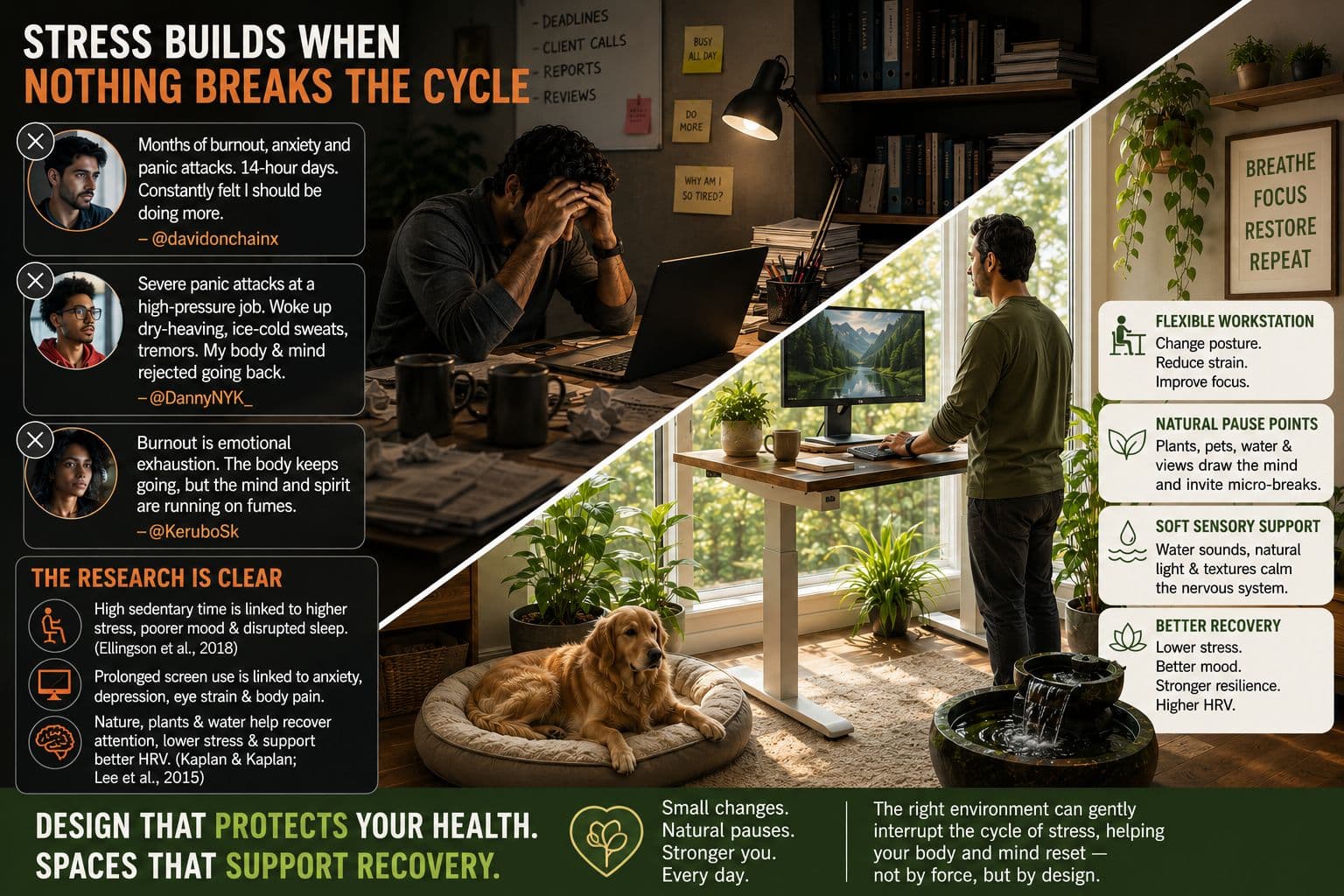
People often describe stress in ways that feel familiar. One person shared how, for months, they battled burnout, anxiety and panic attacks while running a business. They worked fourteen-hour days, stayed up late, and constantly told themselves they should be doing more. The pressure to prove success left them nervous and exhausted on many days. Another wrote about severe panic attacks at a high-pressure job. They woke up dry-heaving, experienced ice-cold sweats and body tremors, and eventually felt their body and mind reject the idea of returning to that environment. A third person explained how their therapist defined burnout as emotional exhaustion. The body keeps going, but the mind and spirit are running on fumes. Small tasks feel heavy. Rest does not fully restore them because the nervous system has been in survival mode for too long.
These accounts are drawn from personal posts shared on X by users including @davidonchainx, @DannyNYK_ and @KeruboSk.
The Pattern Behind Long Hours and Fixed Postures
These accounts show a common pattern. Stress builds when long working hours keep the body in the same posture and the eyes fixed on a screen for hours at a time. Movement stops. The mind stays locked on tasks. Over days and weeks the fatigue becomes both physical and mental. This is often described as screen fatigue.
What Research Shows About Sedentary Work and Screens
Research supports this. Studies have found that high amounts of sedentary time are linked to poorer mood, higher stress and disrupted sleep. One investigation following adults over a year showed that reductions in daily sedentary time were associated with improvements in stress and overall mental wellbeing (Ellingson et al., 2018). Screen-heavy work contributes further. Prolonged screen use has been connected to eye strain, neck and shoulder discomfort, and elevated symptoms of anxiety and depression. When the body remains sedentary and visual attention stays fixed on screens for extended periods, the physiological systems that regulate stress receive fewer opportunities to recover. This limits natural nervous system regulation.
How the Environment Can Quietly Force Recovery
Without support from the physical environment, the stress tends to stay higher. The right kind of environment can lower it by gently forcing breaks that people would otherwise skip. Flexible workstations make it easier to change posture throughout the day. Standing, sitting or shifting position becomes natural rather than an interruption. Biophilic elements go a step further. The presence of plants, a pet, a small water feature or a view of the outdoors creates soft points of attention. In the workaholic mind a break is often so undervalued that the urge to stay productive simply takes over and work continues. The body learns to adapt and bury its needs. Nature, however, has its own way of calling. A pet will come seeking attention. A plant has a quiet tendency to pull the eye. The sound of water and the changing quality of a view both draw attention without effort. The result is a brief distraction that forces the mind to pause. For someone who still wants to feel productive, plants and pets sit higher on the maintenance list among biophilic elements. For those who prefer more passive engagement, water features and outdoor views tend to work best. These moments support body-based stress relief and can form part of a simple recovery routine.
Research on Attention Restoration Theory shows that natural elements engage effortless attention, allowing the directed attention used for concentrated work to recover (Kaplan & Kaplan). Studies on indoor plants have measured lower blood pressure and calmer physiological responses after brief interactions (Lee et al., 2015). Water features and outdoor views have been linked to reduced stress markers in high-density living and work settings. Over time such patterns can help improve HRV and support better emotional regulation.
The Simple Logic
Here is the simple version of the logic. If the space around you never invites a pause, the body stays in one position and the mind stays locked on the same task. Nothing interrupts the flow, so the break that would help never happens. When the space includes living or natural elements that quietly catch the eye or ear, short pauses start to occur on their own. A pet walks over. A plant needs a quick look. Water makes a soft sound. The view outside changes with the light. These small moments give the nervous system a chance to reset more often. Stress does not disappear, but it accumulates less intensely.
Zuiora’s Approach to Residential Design
Zuiora’s philosophy towards residential interior design is that a home should do more than look good or function efficiently. It should actively protect and support the people who live in it. Design choices are treated as tools for daily health rather than purely aesthetic decisions. The focus is on creating spaces that quietly encourage healthier habits, reduce unnecessary strain, and make recovery easier without requiring constant effort from the people living there. This approach supports workplace wellbeing even inside the home and helps prevent burnout before it becomes chronic.
Zuiora approaches this from the understanding that homes and workspaces should actively support health rather than wait for problems to become chronic. Long periods of high stress can lead to lasting physical and mental health issues that later require treatment. The platform focuses on practical, evidence-based design choices that help prevent those outcomes by making healthier patterns easier to follow day after day.
How Lucy Partners in the Process
Lucy works as a partner in this process. She is trained to recognise patterns of workaholism — the tendency to stay fixed in one posture, ignore the passage of time, and skip recovery. She examines the current space and the way a person actually works within it. Then she suggests ways to introduce breaks that still feel productive. These might include a flexible workstation that invites posture changes, a carefully placed plant or water element that creates natural pause points, or simple adjustments that bring a view or living presence into the line of sight. The goal is not to force rest but to make restorative moments feel like a natural part of focused work and support everyday mental fitness.
If long hours, fixed postures and constant screen focus have become the norm, the environment can either keep the stress high or quietly lower it. Lucy is available to explore what that might look like in a specific space.
References
Ellingson, L.D., et al. (2018). Changes in sedentary time are associated with changes in mental wellbeing over one year. International Journal of Behavioral Nutrition and Physical Activity.
Kaplan, R. & Kaplan, S. Attention Restoration Theory (foundational work on nature and recovery of directed attention).
Lee, M.S., et al. (2015). Interaction with indoor plants may reduce psychological and physiological stress. Journal of Physiological Anthropology.
X posts referenced for personal narratives
https://x.com/davidonchainx/status/1951659556599165336
https://x.com/DannyNYK_/status/2076718812754235730
https://x.com/KeruboSk/status/2018475772646748416