Most "senior home safety" advice pictures the same thing: a plastic mat, a steel bar bolted to the shower wall, a raised toilet seat that looks like it belongs in a clinic. If that's put you off making any changes at all, you're not alone — and you're not wrong to want more than that.
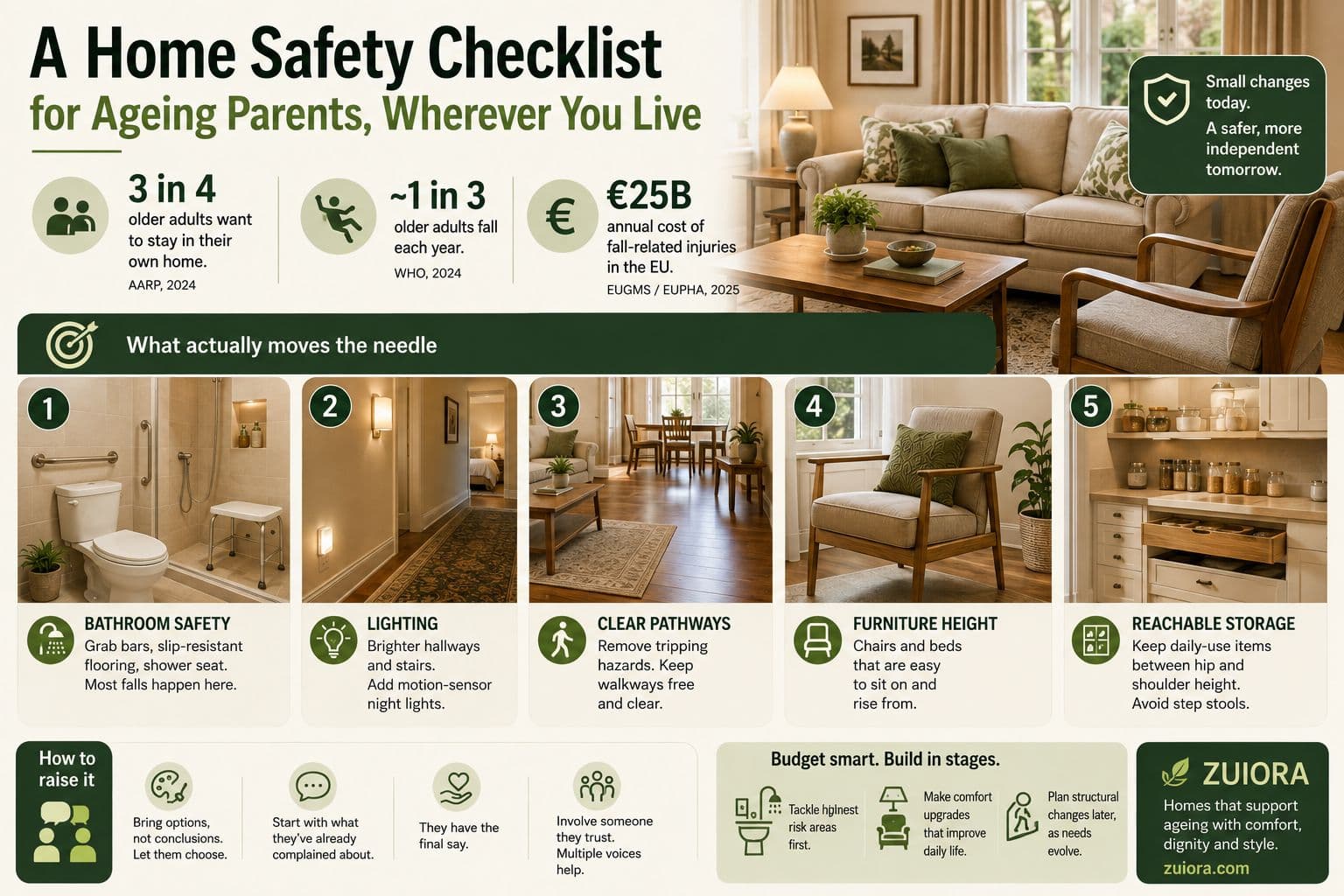
Here's the actual research: about three in four American adults over 50 say they want to stay in their own home for as long as possible, and the picture looks similar wherever it's been studied. The problem was never wanting to age in place. The problem is that most of the products built for it look like they were designed for a hospital ward, not a home you've lived in for decades.
Where falls actually happen — and why it's not what you'd expect
It's not dramatic accidents. Study after study on falls among older adults, in the US and elsewhere, points to the same handful of everyday, fixable things: a hallway that's too dim, a rug that slides, a step whose edge you can't quite see, a bathroom floor that's slippery when wet. In the US, roughly a quarter of adults over 65 fall each year — and less than half ever mention it to a doctor, often because it doesn't feel serious enough, or because bringing it up feels like admitting something. Researchers studying older adults across Europe have found a similar pattern: close to a third fall in a given year, and home hazards show up again and again as a contributing factor.
That second part matters as much as the fall itself. A lot of people who've been through it describe the same thing:
It's not that their judgment has gotten worse — it's that their body doesn't always keep up with what their mind still expects it to do.
That gap is exactly what good design can close, quietly, without turning it into a conversation about decline.
The "hospital" problem is real — and it's solved now
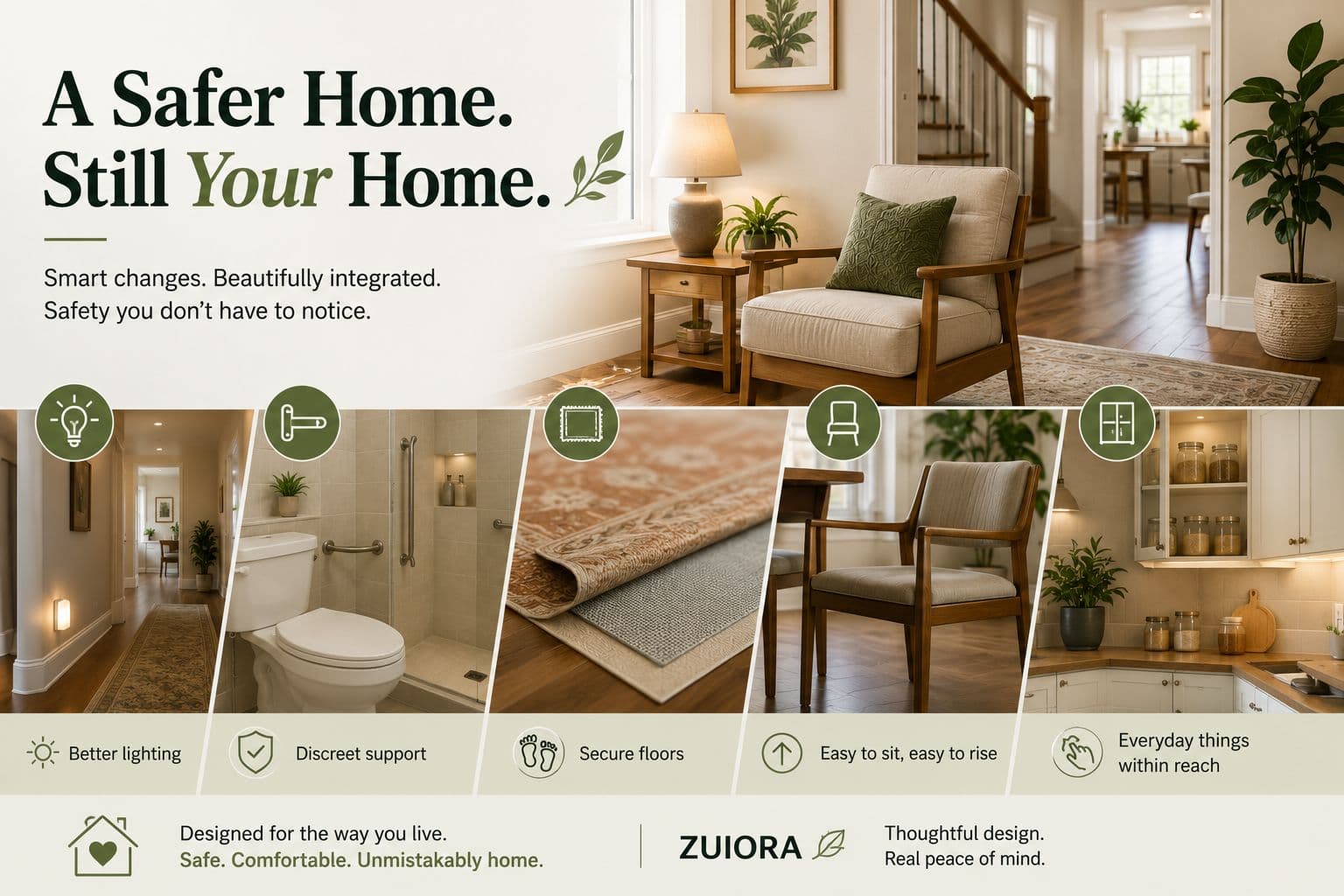
If you've resisted a grab bar because it makes the bathroom look institutional, that instinct has been backed up by actual research: for a long time, the stigma around these products was less about function and more about how clinical they looked. That's changed. Grab bars (in the UK and Ireland, you'll more often see them called grab rails) now come in finishes that match your existing towel rail and taps — one person online, describing theirs, said it simply reads as "a chubby towel bar" unless you know to look for it. Slip-resistant flooring, similarly, now comes in finishes indistinguishable from what you already have down.
None of this needs to announce itself. The best version of a safer home is one where nobody — including you — notices the safety part first.
What actually helps, room by room
- Lighting — brighter, layered light in hallways and stairwells, and a small motion-sensor light for the path between bed and bathroom, does more for fall prevention than almost anything else on this list.
- The bathroom — a grab bar near the toilet and one in the shower, chosen in a finish you'd have picked anyway, plus a shower seat if standing for long periods has started to tire you out.
- Floors and paths — securing or removing loose rugs, and keeping the route you walk most often genuinely clear.
- Furniture height — a chair you can rise from without using your arms as leverage, a bed you don't have to climb into.
- Reach — the things you use daily living between hip and shoulder height, so the step stool stays for the things you rarely need.
You get the final say
If your children have started raising this, it doesn't mean the decision stops being yours. The families who navigate this best tend to be the ones where the older adult picks the finish, the flooring, the pace — while everyone else just handles the logistics. You're allowed to say no to the version that looks medical, and yes to the one that just quietly works.
If you're exploring what this could look like in your own home — evidence-based, personalized, and designed to feel like home first — Zuiora starts that conversation for free.
If you're reading this in India, on behalf of a parent or grandparent: that's common, and not a sign of anything unusual. Most Indian seniors don't go online to research things like this themselves yet — recent research from HelpAge India found only about 1 in 8 do — so this kind of search usually starts with an adult child or grandchild. It doesn't change who the decision belongs to. The same principle above still applies: bring your parent options, not conclusions, and let them choose the finish.
Sources
- AARP, 2024 Home and Community Preferences Survey (aging-in-place preference data)
- CDC fall statistics among adults 65+, as cited in HealthCraft Products and AgeInPlaceGuide.com
- Rommers et al., "Epidemiology of falls in community-dwelling older adults in Europe," Age and Ageing, 2025 (average European fall prevalence ~31%)
- HelpAge India, "Understanding Inter-generational Dynamics & Perceptions on Ageing" (2026)
- AskMetaFilter, "Toilet safety for the vain and elderly"