Your father winces getting up now. Not dramatically — just a small, private wince, the kind he'd never mention. It's usually the same few moments: the squat toilet that's been in that house for thirty years, the floor cushion at the dinner table, the low stool in front of the puja altar. None of these used to be a problem. All of them ask the same thing of his knees.
This is one of those issues that's genuinely common and genuinely under-discussed, mostly because each individual moment feels too small or too private to mention. Taken together, though, they add up to a real, addressable pattern — not one fixture, but a handful of everyday transitions throughout the home that all rest on the same joint mechanics.
Why this becomes a problem with age
The deep squat itself isn't the issue — it's well studied and, if anything, has real digestive advantages over sitting. The problem is what a full squat asks of the knees and hips: a complete, deep bend, repeated multiple times a day, often on a wet or slightly slippery floor, with nothing nearby to hold onto for the transition down or the push back up.
For someone with arthritis, reduced knee flexibility, or general joint stiffness — extremely common by the 60s and 70s — that transition becomes the hardest and riskiest moment in whichever room it happens in. It's also where balance is most compromised: deep in a squat, close to the floor, is a genuinely bad place to lose your footing, whether that's on a wet bathroom tile or a living room rug.
Why families tend to wait too long on this
It doesn't look like a "problem" the way a fall or a fracture does — it's just discomfort, easy to write off as ordinary aging. And the assumed fix, for the bathroom at least, feels disproportionate: a full renovation, a new toilet installation, weeks of disruption, real cost. So the wincing continues, quietly, across several rooms, for years.
The bathroom: start here, and start small
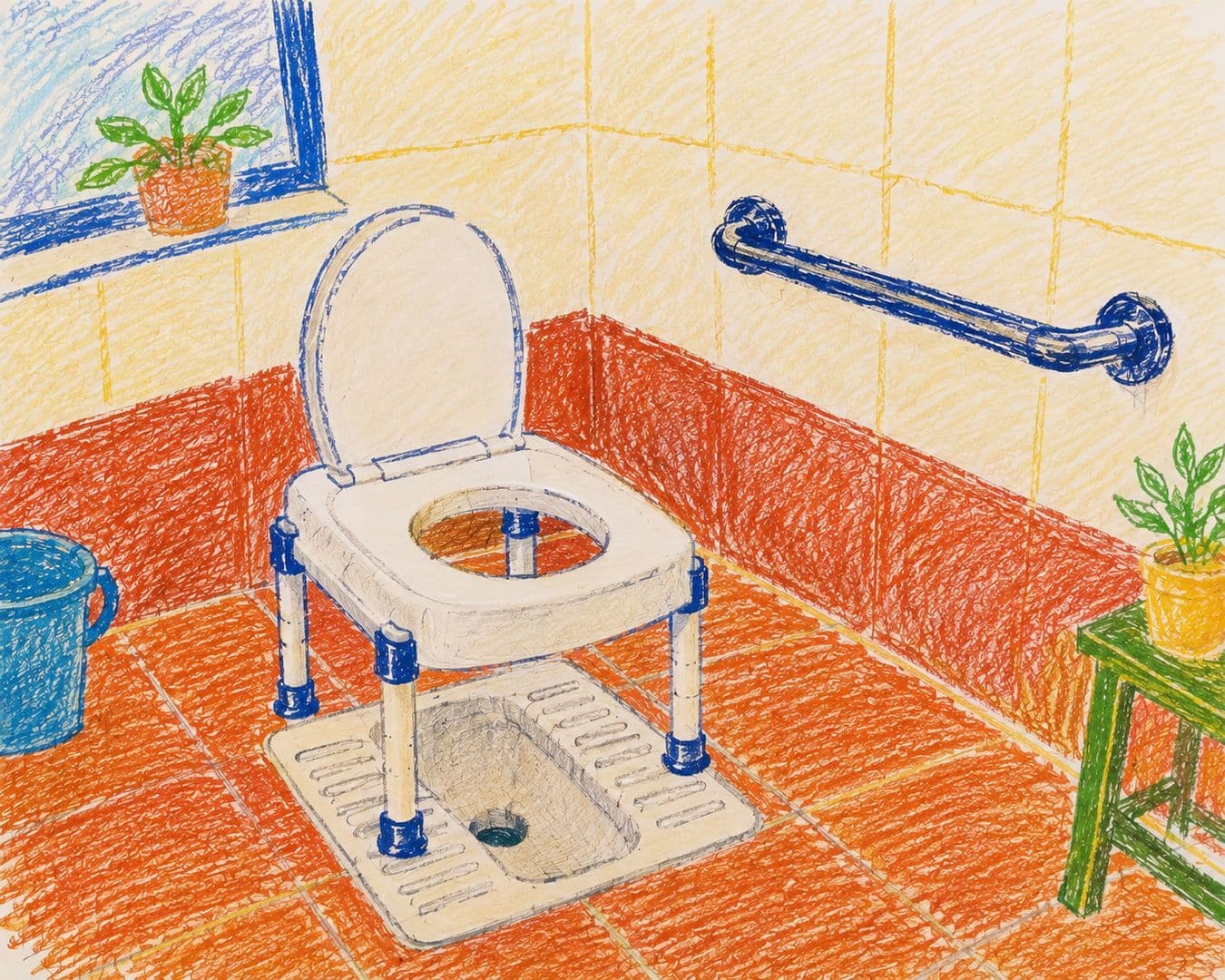
- A portable toilet converter first. A raised seat unit that sits directly over the existing squat pan — no plumbing work, no civil work, nothing permanent. It installs in minutes and can be removed just as easily, which makes it a genuinely low-risk way to test whether this actually helps before committing to anything bigger. This is the right starting point for most families, and particularly for rented homes or joint-family houses where a permanent change isn't a simple decision to make alone.
- A wall-mounted support rail or grab bar beside wherever the toilet ends up, sitting or squatting — the sit-to-stand transition is the highest-risk moment, and a rail turns it from a balance act into a supported movement.
- A full Western or Anglo-Indian hybrid installation, if the portable version proves the point and the household wants a permanent fix. A hybrid model — usable both sitting and squatting — is worth considering in homes where other family members genuinely prefer the traditional posture and don't want to lose the option.
- Non-slip flooring treatment in the wet area specifically. Indian bathrooms are often designed around standing water, which makes the tile immediately around the toilet and shower the single highest-risk surface in the house. A traction-improving treatment or mat here matters as much as the fixture itself.
- A shower stool, if standing to bathe has become tiring or unsteady — a natural companion fix, since standing-bath fatigue and squat-toilet strain usually show up in the same joints around the same time.
Beyond the bathroom: the rest of the house asks the same thing
Once you notice the pattern, it tends to show up everywhere the household sits close to the floor.
- A proper puja stool or low chair, rather than sitting directly on the ground. A stool in the 10–14 inch range keeps the same close-to-the-floor posture and sightline to the altar while meaningfully easing the knee load of getting down and up — this is now a well-established, purpose-built category of furniture rather than a compromise on tradition.
- A dining chair option alongside floor seating, for meals that are traditionally taken cross-legged on the floor. This doesn't have to replace the family's usual way of eating — it just needs to exist as a comfortable, unremarkable option so your parent isn't choosing between joining the meal and protecting their knees.
- A firm, stable seat height for everyday floor-adjacent tasks — sorting laundry, gardening, low storage — wherever your parent currently gets down to the floor out of habit rather than necessity.
What to actually watch for
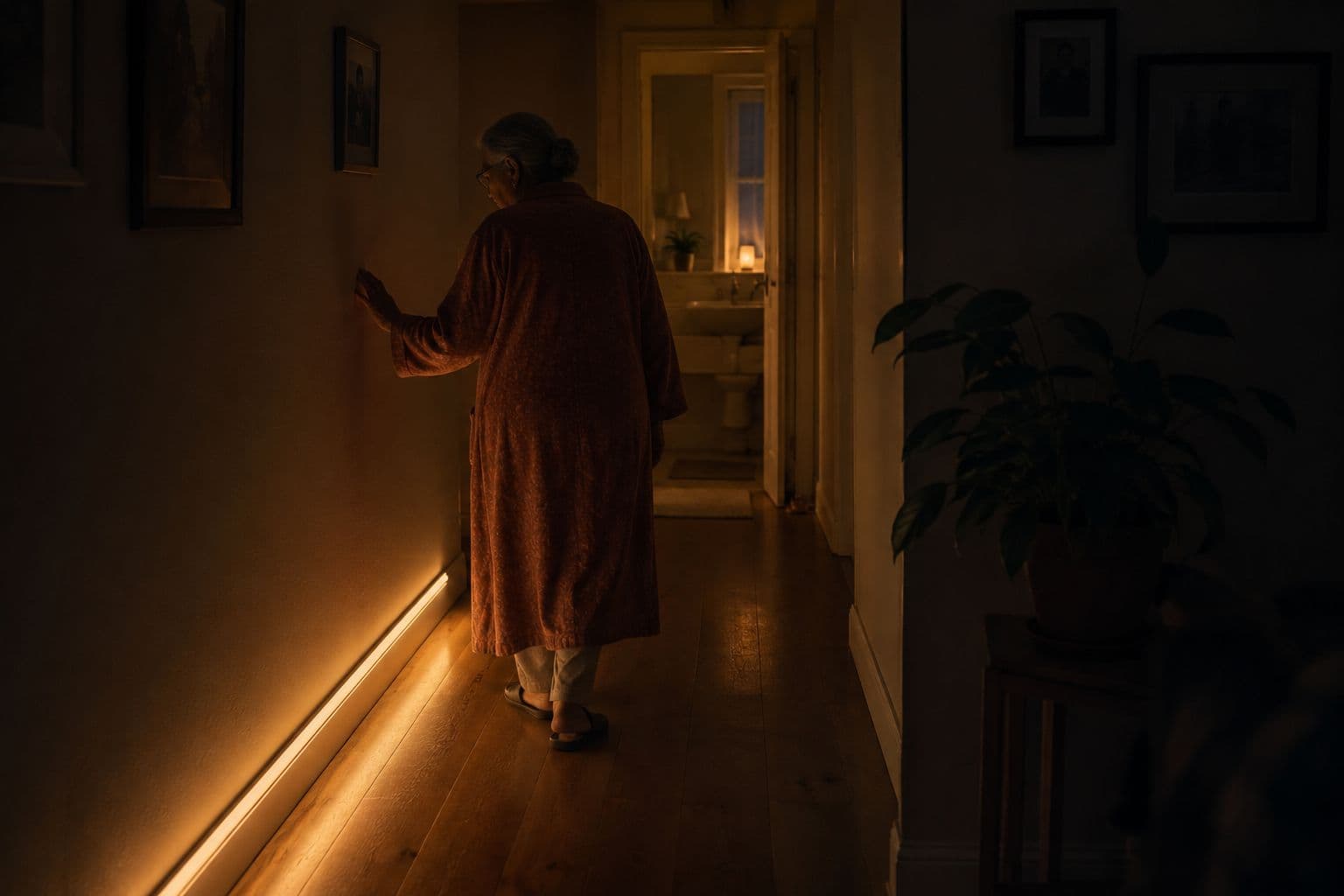
If your parent hasn't said anything but you've noticed hesitation before using the bathroom, a hand braced against the doorframe that wasn't there before, or a general slowing-down around the puja room or the dinner table specifically — that's usually the tell. It's a private, physical discomfort people tend not to volunteer, which means it's often the adult child who has to notice it first, not wait to be told. And because it tends to show up in more than one room, noticing it in one place is often a useful cue to look for it in the others, too.
If your family is weighing this alongside other bathroom or home changes, Zuiora can help you sequence what actually needs doing first, and what can wait.
Sources
- Astral Bathware, "Indian Toilet vs Western Toilet: Which is Better?"
- EASYCARE, "How to Convert an Indian Toilet to Western at Home"
- Ruhe India, "Western Toilets vs. Indian Toilets: Which is better?"
- MyGetWellStore, "Best Toilet Chair for Senior Citizens in India"
- Homestyler, "Choosing the Perfect Stool for Your Pooja Room"
- Lakdi.com, "Navratri Ergonomic Furniture: Comfortable Seating for Puja"