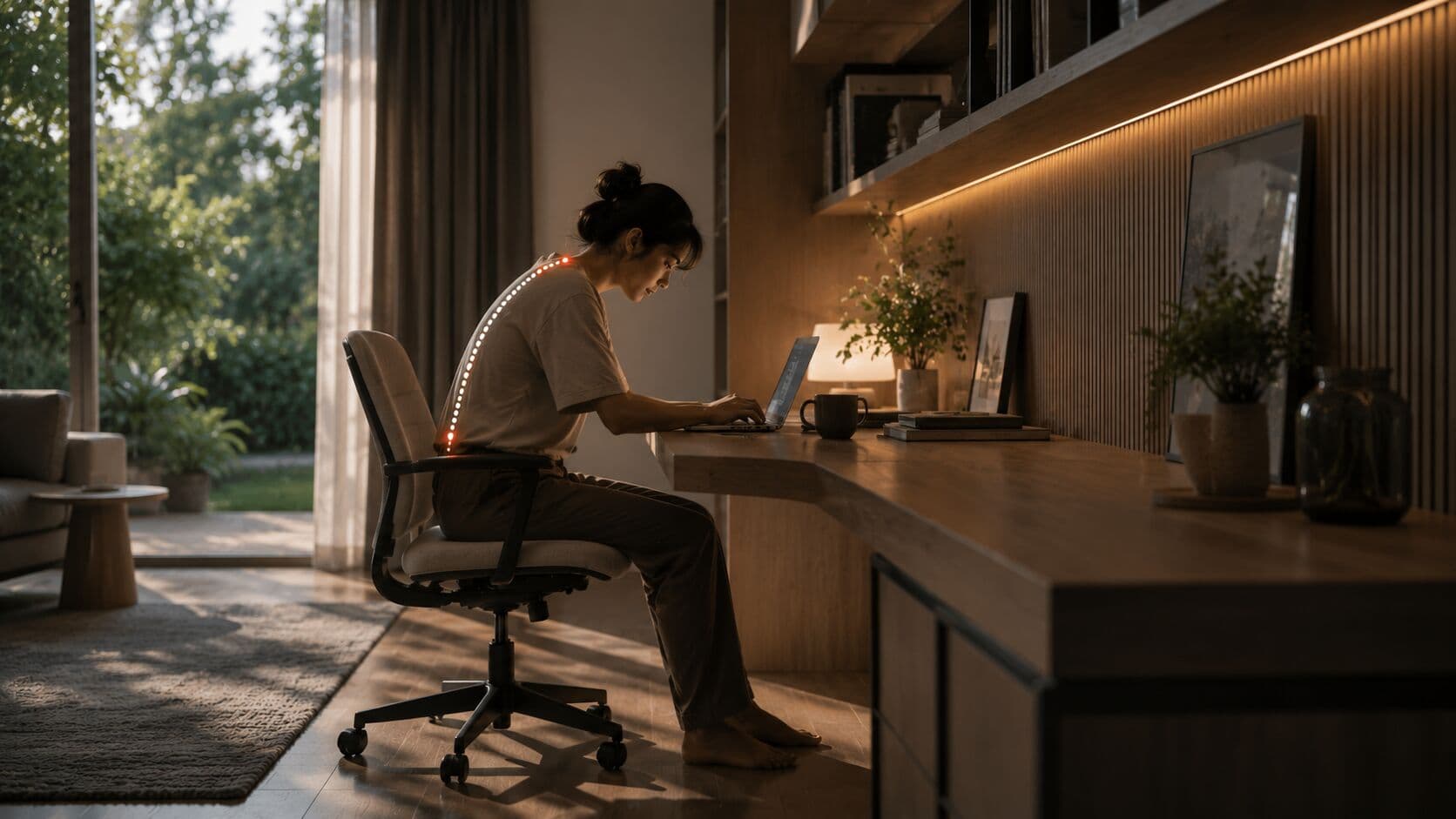
You finish your day and your back is already aching. There's a stiffness in your lower back or a dull, persistent pain between your shoulder blades. You didn't lift anything heavy. You didn't do any intense physical work. Yet the discomfort is there, almost every single evening.
Many people in this situation try getting regular massages, hoping it will ease the pain. While the massage brings temporary relief, the ache often returns within a day or two. This happens because the root cause of the pain is still present in your daily routine.
Most back pain of this kind doesn't come from one big incident. It comes from the way your body is positioned for long hours while doing ordinary tasks.
Think about the different surfaces where you spend extended time.
At the kitchen counter, you often stand for long periods while chopping, cooking, or washing dishes. If the counter height doesn't suit your posture, you end up leaning forward or hunching slightly. This repeated forward bend puts continuous pressure on your lower back throughout the day.
At your work table or desk, the issue is often similar but in a different way. If your chair is too low or your screen is positioned too low, you keep tilting your head down and rounding your shoulders forward. Hours spent in this position create tightness and pain in the upper back, neck, and shoulders.
Even at the study table, whether it's for you or your child, the same pattern continues. A table that is too low or too high forces the body into a forward-leaning posture for long durations, putting steady strain on the spine.
Because these postures are repeated every single day at the kitchen counter, work table, and study table, the stress on your back keeps building. This is why massages, while helpful for short-term relief, often don't solve the problem in the long run. The daily strain continues as long as the surfaces you use remain the same.
The truth is, your back isn't weak. It's simply being asked to stay in awkward positions for hours every day at the very places where you spend most of your time.
The good news is that these activity zones — the kitchen counter, work table, and study table — can be adjusted to support your body better instead of working against it.
Lucy was built for exactly this kind of problem. She looks at how you actually use your kitchen counter, your work table, and your study area — and figures out where the height or positioning is quietly hurting you. Then she suggests practical adjustments, small ones you can make without renovating or spending much, that take the strain off your back where it starts.
If your back has been quietly protesting every evening, say hello to Lucy. She can help you understand why — and show you simple ways to make your daily workspaces kinder to your spine.