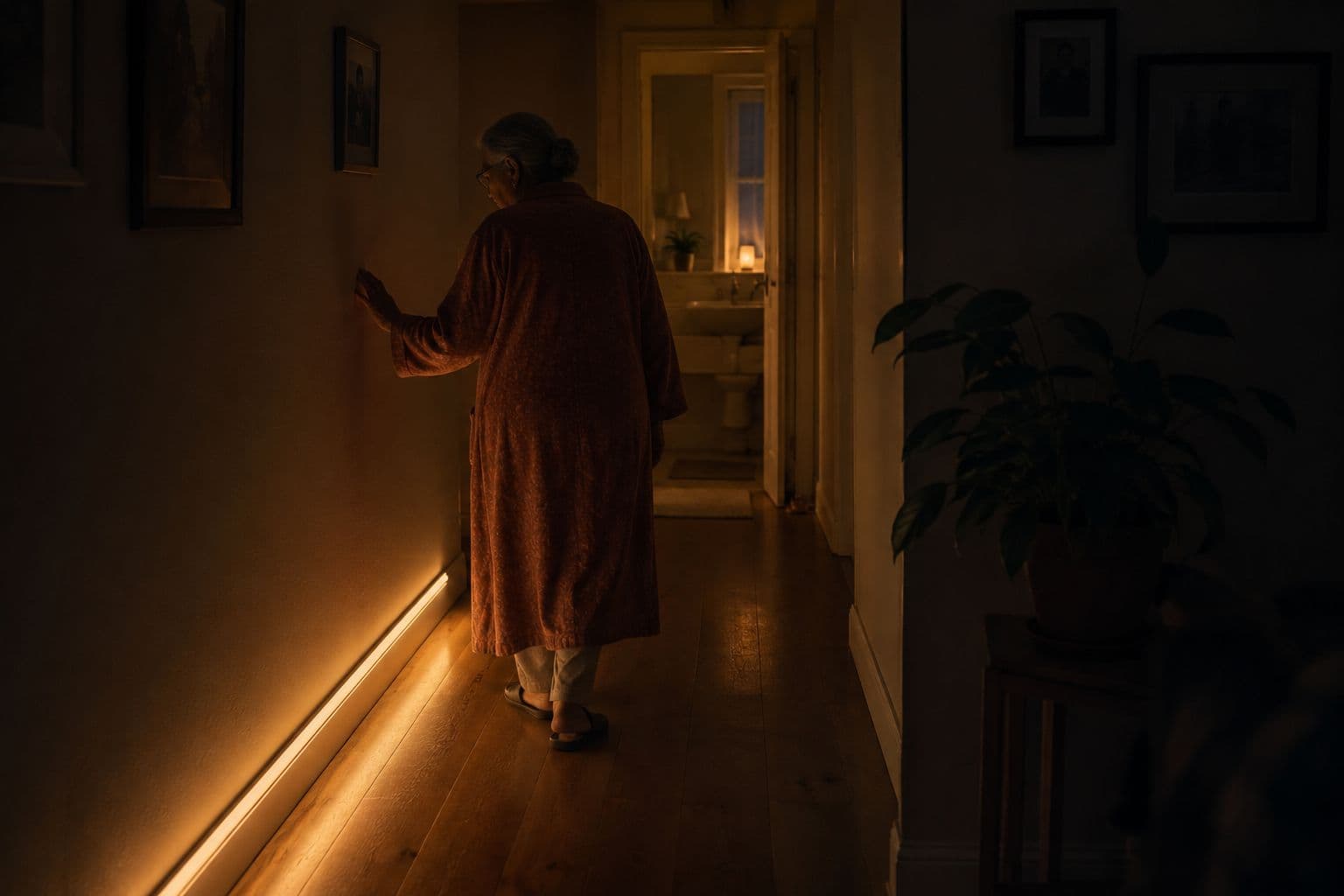
You've probably already noticed stuff. The hallway that's pitch black when you visit in the evening. The step she always warns you about, right before she takes it herself without thinking twice. The stool your grandfather still climbs on to reach the top shelf, the one that looks older than you are.
(Grandma, Nani, Dadi, Oma, whatever you call her — this works the same either way.)
You don't need permission, a budget, or a family meeting to do something about most of this. You need about twenty minutes and a bit of noticing.
Why this is a bigger deal than it looks
Here's the honest version: most grandparents don't want to leave the home they've lived in for decades, even after a scare. It doesn't take a dramatic event to change that, either — usually it's something as ordinary as a dark hallway or a loose rug that turns into the reason someone can't stay. That's a pretty big outcome for something this fixable.
So when you swap a rug for one that doesn't slide, or move a lamp so the hallway isn't dark at 7pm, you're not doing a chore. You're buying them more time in the house they actually want to be in.
Stuff you can just do
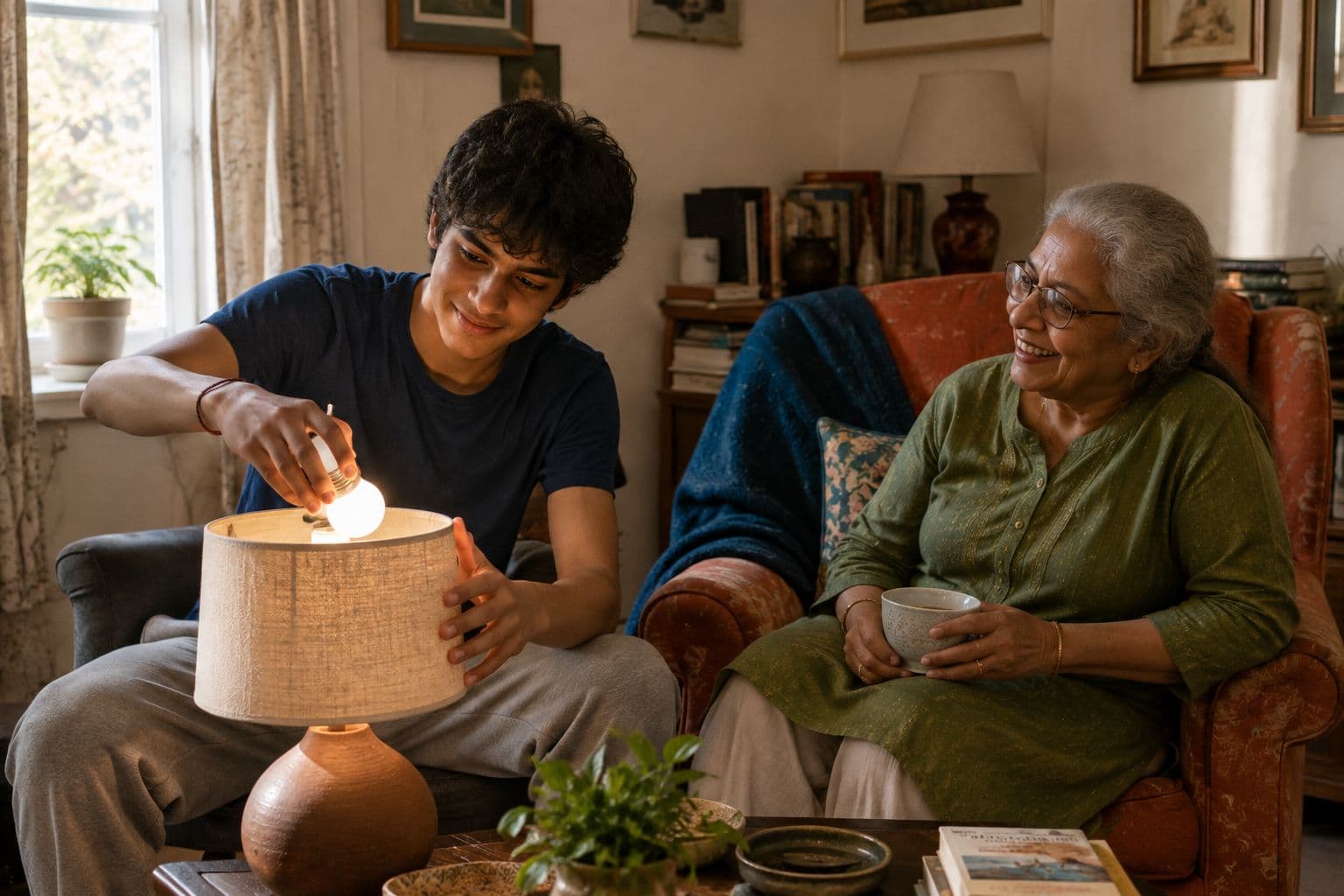
Fix the lighting. A dim hallway or staircase is an easy thing to make someone finally replace the bulb for. A brighter bulb or a cheap motion-sensor night light near the bathroom is a five-minute fix with an outsized payoff.
Clear the floor. Trailing charger cables, a loose rug, shoes left in the walking path — these cause more falls than anything dramatic. A five-minute tidy of the route between bedroom and bathroom, or kitchen and living room, does more than people think.
Move the daily stuff within reach. If your grandfather's climbing on a stool for the tea he drinks every day, move the tea down and put the stool-only things up top instead.
Simplify anything confusing. Big-button remotes, a written note near a fiddly switchboard, a simplified phone home screen — small stuff, but it removes friction they've probably stopped mentioning because they've just gotten used to it.
Add a plant. Genuinely just a nice thing to do — a low-maintenance plant on a windowsill makes a room feel more alive, and it's something you can pick out and gift rather than a "fix."
The most useful thing costs nothing: ask
Before changing anything, ask what actually annoys them about their own home. Not "are you safe" — that question puts people on the defensive, because nobody wants to admit they're struggling.
Try: "Is there anything here that's annoying to use?"
You'll usually get a real, specific answer — a cabinet that's too high, a chair that's hard to get out of. That answer is worth more than any generic list, because it's what they actually deal with every day.
Make it a project, not a favour
This works a lot better as something you do with them than to their house. Let your grandmother pick the new lamp. Let your grandfather choose where the plant goes. It turns a slightly awkward "we're worried about you" situation into a weekend project you did together — which, honestly, beats most of what you'd otherwise be doing at their place on a Sunday.
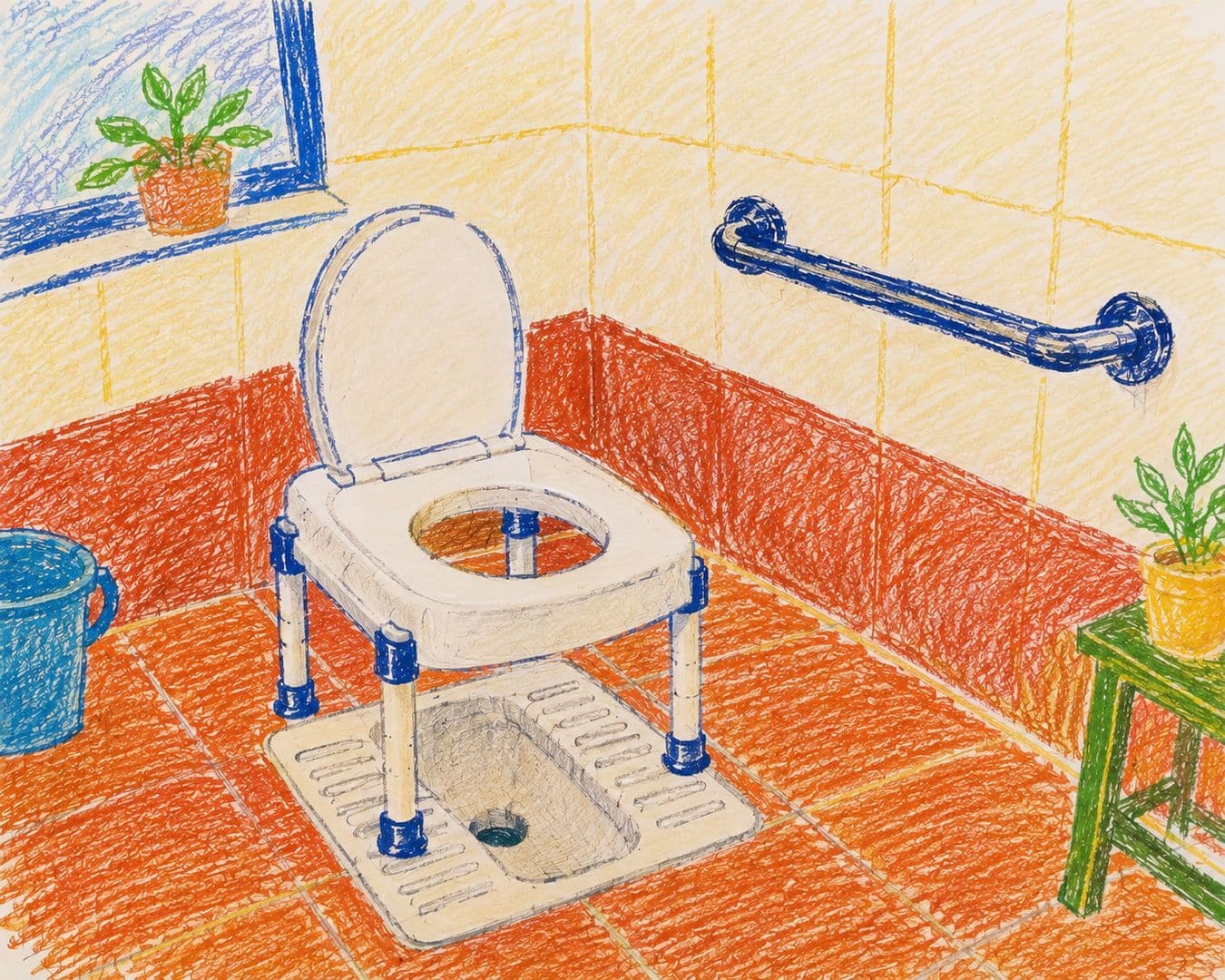
If your family ends up wanting to do something bigger — a bathroom redo, new flooring — that's a conversation for the adults and a proper design team. But a lot of what actually matters day to day, you can start yourself, this weekend.
Zuiora designs homes that work for every generation in and around them — including the small changes that make the biggest difference. zuiora.com